Building Your Fundamental C-TAC Training Kit
The first pieces of gear are not just equipment. They change the way a student learns to move, think, position, and make decisions.
Most beginning C-TAC students eventually ask the same practical question: what do I need in my basic training kit?
That is a good question, but it is not only an equipment question. In C-TAC, the kit is not separate from the training. The training gun, training knife, tourniquet, belt, holster, and daily clothing all become part of how the student learns to move, think, position, and make decisions.
This is one of the first places where C-TAC begins to separate itself from many traditional martial arts environments.
In many systems, students learn the art in the historically passed-down way first. Later, someone may introduce a training gun, a training knife, or a tactical problem and try to place those things on top of the movement they already know. I believe that is backwards.
When I began training regularly with this type of gear on my body, I had to go back and change many of the fundamentals I had learned. I had to correct habits that may have worked inside a traditional martial arts format but did not fit the environment, the equipment, the tactics, or the responsibilities I was now training for.
If you are training martial arts simply for the sake of martial arts, there is nothing wrong with that. But if you are training because you believe the material may help you protect yourself or someone else, then the environment matters. The equipment matters. The legal and social context matters. The way your clothing moves matters. The way your belt carries gear matters. The way your hands interact with tools under pressure matters.
That is why the fundamental C-TAC training kit is introduced early.
The Kit Changes the Way You See the Training
The kit gives the student a more honest relationship with the environment. It changes the way you look at stance, posture, footwork, clinching, distance, pressure, access, entanglement, and recovery. It also changes the way you understand what is visually appropriate, socially acceptable, legally explainable, and tactically sound.
Most martial arts are not built around those requirements.
Many systems focus heavily on the assault level of force. They train the moment where the fight is already physical and the exchange is already underway. That level matters, but it is not the whole picture. In real life, much happens before that point.
There are choices, warnings, positioning opportunities, communication problems, environmental limitations, and vulnerability factors that form before anyone throws a punch.
If you become better at recognizing and managing those earlier stages, you may never need to enter the assault-level exchange at all.
Because the truth is simple: no one really wins a fight.
Even when you survive it, you may still have injury, legal exposure, social consequences, emotional cost, or responsibilities to other people who depended on your judgment. C-TAC training is not built around looking tough. It is built around becoming more capable.
The kit helps the student begin that process with the right questions.
Start With the Core Kit
For most beginning students, the first three items are simple: an inert training gun, a safe training knife, and a training tourniquet. Each one teaches a different category of responsibility.
Training Gun
The training gun allows the student to safely examine how firearm presence changes movement, distance, positioning, access, retention, awareness, and decision-making.
Training Knife
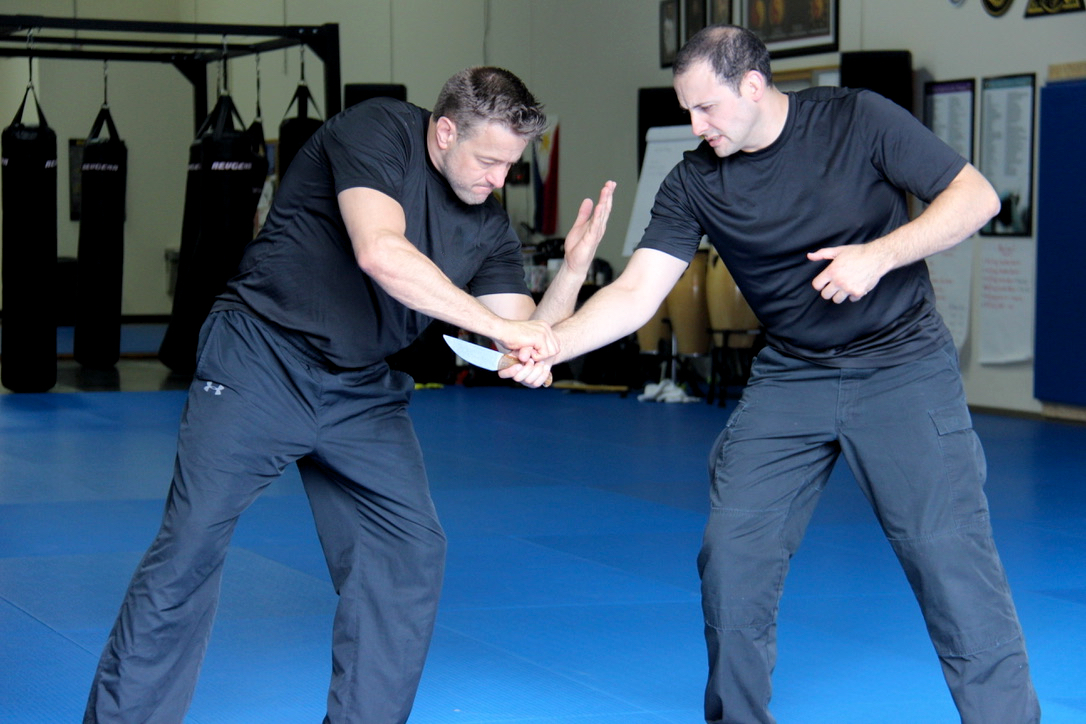
The training knife helps students understand edged-tool presence, line awareness, entanglement, access, and why avoidance and positioning matter so much.
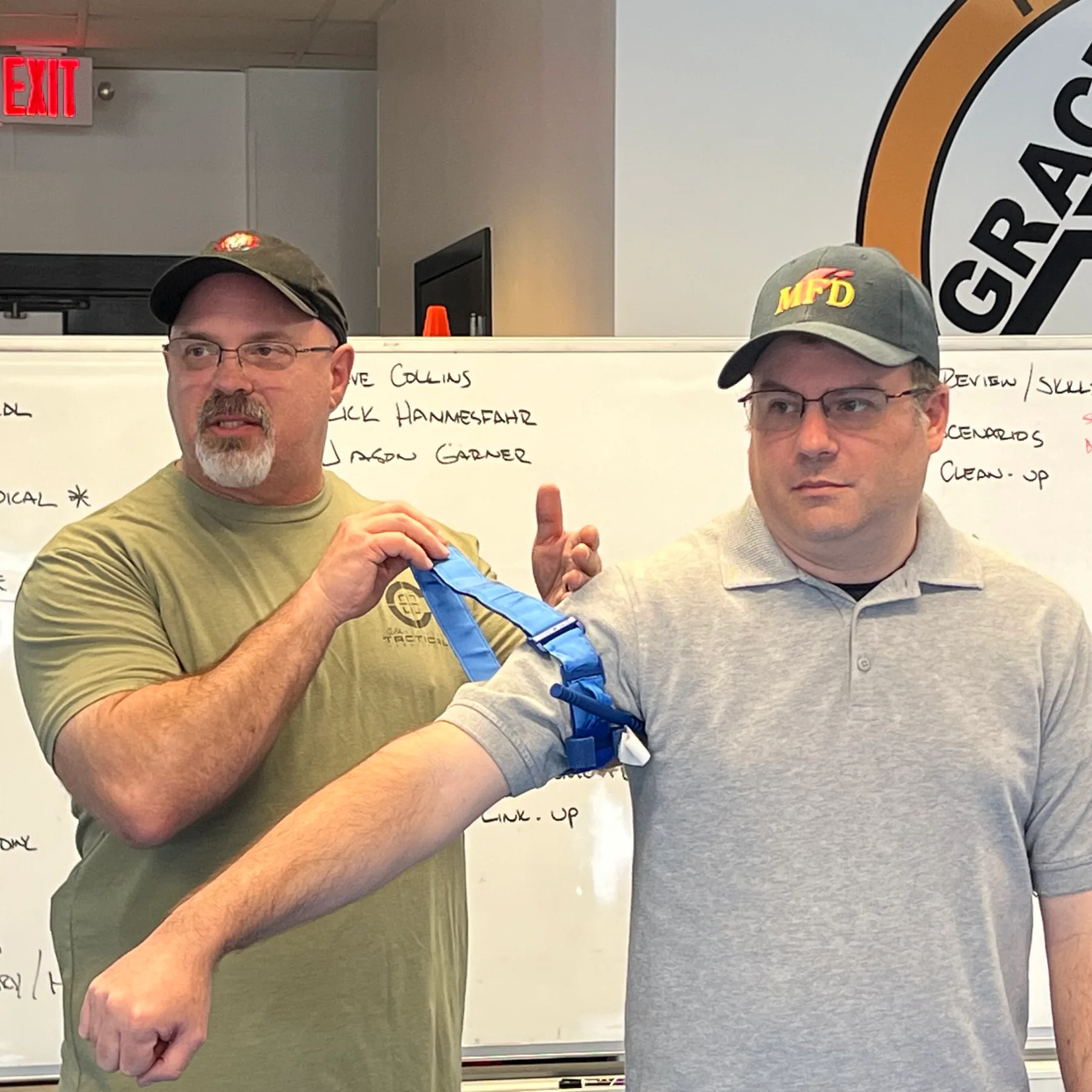
Training Tourniquet
A training tourniquet belongs in the kit because responsible self-protection includes consequence management, emergency habits, and care for the people involved.
The Training Gun
The training gun does not mean every class becomes a firearms class. It means students begin to understand how the presence of a firearm changes the body mechanics and tactical problems around them.
A training gun should be inert, clearly non-functional, durable enough for repeated practice, and appropriate for the type of holster or carry position being studied.
The Training Knife
The goal is not fantasy knife fighting. The goal is to understand how fast the problem can change when an edged tool is present, how much positioning matters, and why awareness and avoidance are so important.
A good training knife should be safe for contact practice, visible enough for the training environment, and shaped closely enough to create realistic habits without creating unnecessary danger.
The Training Tourniquet
If you are training around violence, tools, vehicles, or real-world injury potential, you should also be developing basic emergency-response habits. A training tourniquet allows students to practice placement, access, and application without wearing out or contaminating medical equipment intended for real emergencies.
The training tourniquet should be clearly separated from your real medical gear. Practice equipment is for practice. Emergency equipment is for emergencies.
Clothing Is Part of the Training
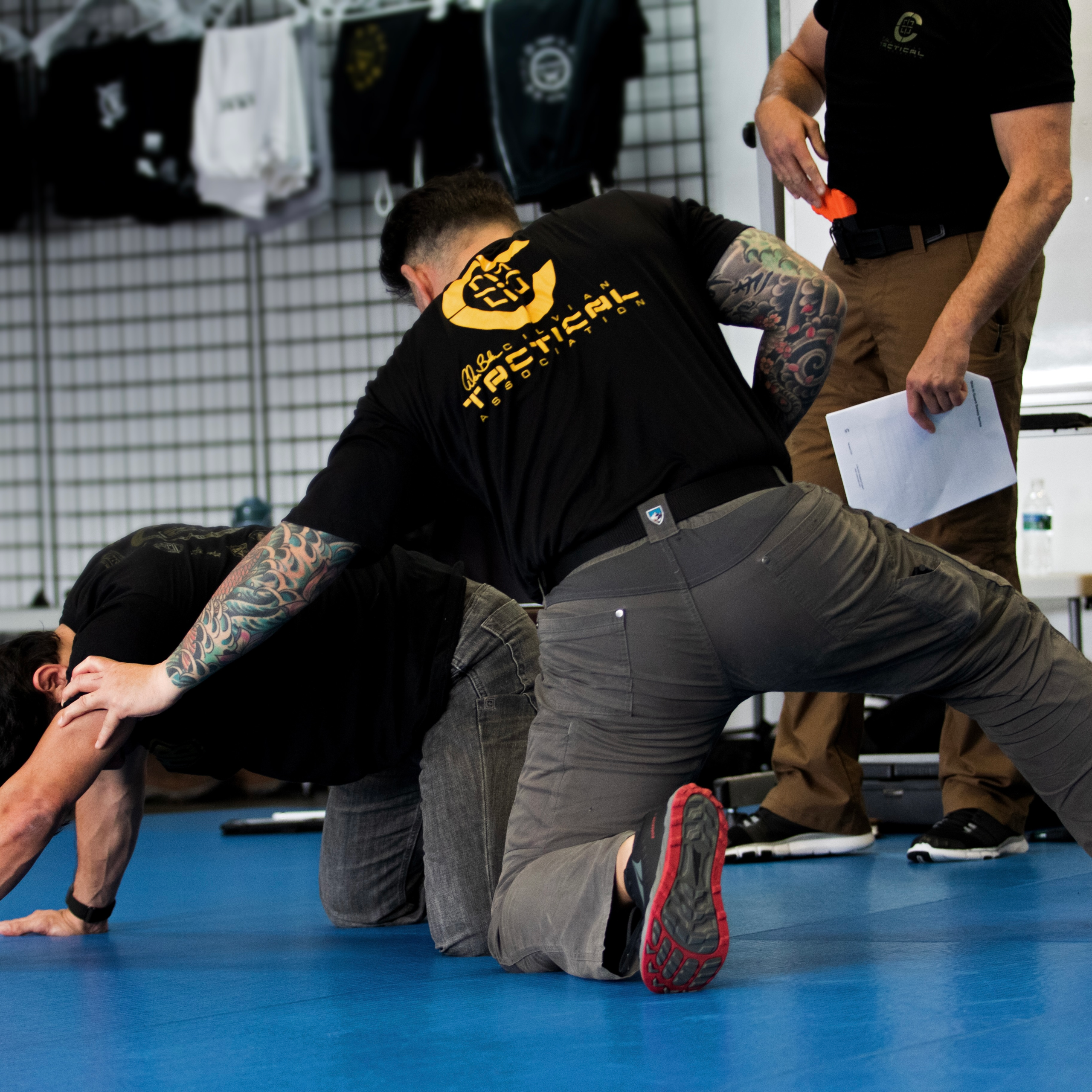
Students often think about the training gun or training knife first, but clothing may be just as important.
You should train in clothing that is similar to what you actually wear in daily life. If you wear jeans, train in jeans. If you normally wear a jacket, sweatshirt, work shirt, or untucked shirt, you need to understand how those layers affect access, movement, visibility, and entanglement.
Training in unrealistic clothing can create unrealistic confidence.
A technique that works easily in athletic pants and an open training shirt may change when you are wearing a belt, pockets, a holster, a jacket, boots, or everyday street clothing. Your clothing may help you. It may also restrict you. You need to know that before you are under stress.
C-TAC training asks the student to examine the reality of the environment, and your clothing is part of that environment.
You Will Probably Need a Good Belt
Once you begin working with training tools, the belt becomes more important.
A weak belt changes everything. It can move, sag, twist, collapse, or fail to support the equipment in a consistent position. That inconsistency changes your mechanics.
A good tactical or reinforced belt gives the student a stable platform for training. It helps keep the holster in place. It supports the training gun. It allows the student to repeat the same movement patterns with less gear-shift and confusion.
This does not mean every student needs the most expensive belt available. It means the belt must be strong enough and stable enough to support the work being done.
If the gear moves every time you move, you are no longer studying the same problem.
The Holster Matters
The holster is not a minor detail.
The type of holster you use affects access, concealment, retention, body position, hand path, clothing management, and safety habits. A student using an outside-the-waistband holster may experience a very different training problem than a student using inside-the-waistband carry. Appendix carry, strong-side carry, and other positions all change the mechanics.
This is why students should not treat the holster as decoration. It is part of the training environment.
The holster should securely hold the training gun, fit the belt properly, and match the carry method being studied. Students should also understand that different holsters create different responsibilities. A poor holster can teach poor habits.
The question is not only, “Can I carry this item?”
The better question is, “Does this setup help me build the correct mechanics for the environment I am preparing for?”
Why C-TAC Starts This Way
C-TAC introduces this equipment early because the gear reveals problems that empty-hand training can hide.
A movement that looks clean in a traditional class may become compromised when a holster is present. A stance that feels strong in open space may expose a tool side. A clinch entry that works in a sport format may create problems when training tools are introduced. A habit that was acceptable in one system may not fit the visual, social, legal, or tactical demands of self-protection.
That is not an insult to martial arts.
It is an acknowledgment that different training goals require different training conditions.
If your goal is cultural preservation, athletic development, personal discipline, or enjoyment of an art, then the traditional format may be exactly what you need. But if your goal is practical self-protection, then the training must account for the environment in which self-protection actually happens.
That environment includes clothing, tools, belts, holsters, injury management, legal standards, social perception, and the force continuum.
The Force Continuum Changes the Conversation
Many martial arts spend most of their time at the higher end of force. They train striking, throwing, locking, choking, weapon work, or other physical responses. Those skills can be valuable, but they do not represent the full range of self-protection.
In daily life, much of the work happens before that level.
You may need to notice a developing problem. You may need to create distance. You may need to leave. You may need to communicate clearly. You may need to protect another person. You may need to avoid making the situation worse. You may need to explain why your actions were appropriate.
C-TAC training is concerned with the whole process, not only the fight.
The fundamental kit supports that process because it forces the student to train with more honest constraints. It helps the student understand that tactics are not separate from tools, clothing, environment, and responsibility.
A Simple Beginning Kit
For most new students, the fundamental kit begins with:
- 1An inert training gun
- 2A safe training knife
- 3A training tourniquet
- 4A stable tactical or reinforced belt
- 5An appropriate holster for the training gun
- 6Clothing similar to what you actually wear
- 7A bag or pouch to keep training equipment separate from real equipment
You do not need to build the entire kit at once. Start with the essentials and build intelligently.
The goal is not to collect gear. The goal is to create a training environment that teaches the right lessons.
Keep Training Equipment and Real Equipment Separate
This point matters.
Training tools must be clearly separated from real weapons and live medical equipment. A training gun is not a firearm. A training knife is not a live blade. A training tourniquet is not the tourniquet you plan to use in an emergency.
Develop the habit of separating practice equipment from emergency equipment. Mark it clearly. Store it consistently. Inspect it before training.
Good training habits are part of self-protection.
Build the Kit, Then Let It Teach You
Once you begin training with the kit, pay attention to what changes.
Does your shirt block access? Does your belt shift? Does your holster move? Does your stance expose something you did not notice before? Does your empty-hand habit still make sense when a training tool is present? Can you move, communicate, protect, and make decisions without becoming tangled in your own equipment?
These are not small details. They are part of the training.
The kit will show you what needs to be corrected.
That is one of the reasons C-TAC begins here. We are not trying to add tactical equipment to martial arts after the fact. We are trying to build the training environment correctly from the beginning.
If you had to use your training under the conditions of your actual daily life, would your current clothing, belt, holster, and habits support you or work against you?
Continue the Training
If you are beginning C-TAC training, start with a fundamental kit that helps you train safely, consistently, and honestly.
Use the recommended kit list as a starting point. Select equipment that fits your training needs, your instructor’s guidance, and the environment you are preparing for.
View the C-TAC Basic Training Kit