Civilian Tactical Training Association
Protection Is a Different Mission From Fighting
Why responsibility changes the objective, the decisions, and the meaning of success
Fighting skill remains valuable, but in a protection problem it must serve something larger. Success is not measured only by what happens to the threat. It is measured by what happens to the person you were responsible for protecting.
Most martial arts training begins with an understandable assumption: the person in front of you is focused on you. They want to strike you, grab you, control you, or take something from you. You are the objective, so the problem can be organized around an exchange between two people.
That assumption shapes the way people train. The stance is built around the opponent. The technique is measured by what it does to the opponent. The drill often ends when the strike lands, the takedown is completed, the escape succeeds, or one person establishes control. Within the boundaries of a fighting exercise, those measurements can make sense.
The mission changes the moment you become responsible for someone else. The person creating the problem may not be focused on you at all. Their attention may be fixed on your spouse, child, student, client, friend, or another person standing nearby. You may not be the intended target. You may simply be the obstacle between the threat and the person they want to reach.
Now the encounter can no longer be understood as a duel. You are not solving only the person in front of you. You must manage the threat, the protected person, the environment, and an available path toward safety. Physical skill remains part of the answer, but it is only one part of a much larger responsibility.
Fighting asks whether you can defeat the person in front of you. Protection asks whether you can safely resolve the mission.
A Different Measurement
The Mission Defines Success
A person can win the physical exchange and still fail the protection mission. Imagine moving aggressively toward a threat while leaving a child, spouse, or client exposed behind you. The technique may work exactly as practiced. The threat may even be physically overcome. But if the protected person is injured, separated, trapped, or left accessible to another threat, technical success has hidden a larger failure.
This is why protection needs a different definition of victory. The objective is not personal dominance, punishment, or proving that a preferred system works. The objective is to reduce harm, preserve life, move the protected person toward safety, and end the problem with no more force than the circumstances reasonably require.
Sometimes accomplishing that mission may require decisive physical action. Sometimes it may require a clear boundary, a change of position, an early exit, a locked door, a request for assistance, or the decision not to enter a deteriorating environment. Protection does not reject fighting skill. It places that skill under the direction of judgment and responsibility.
The distinction matters because people tend to act according to the measurements used in training. If every drill rewards forward pressure, domination, and continued engagement, students may begin to interpret disengagement as failure. If every scenario ends the moment a technique succeeds, they may never develop the habit of locating the person they were supposed to protect, checking the environment, or moving toward safety.
The Protection Problem
Four Responsibilities Must Be Managed Together
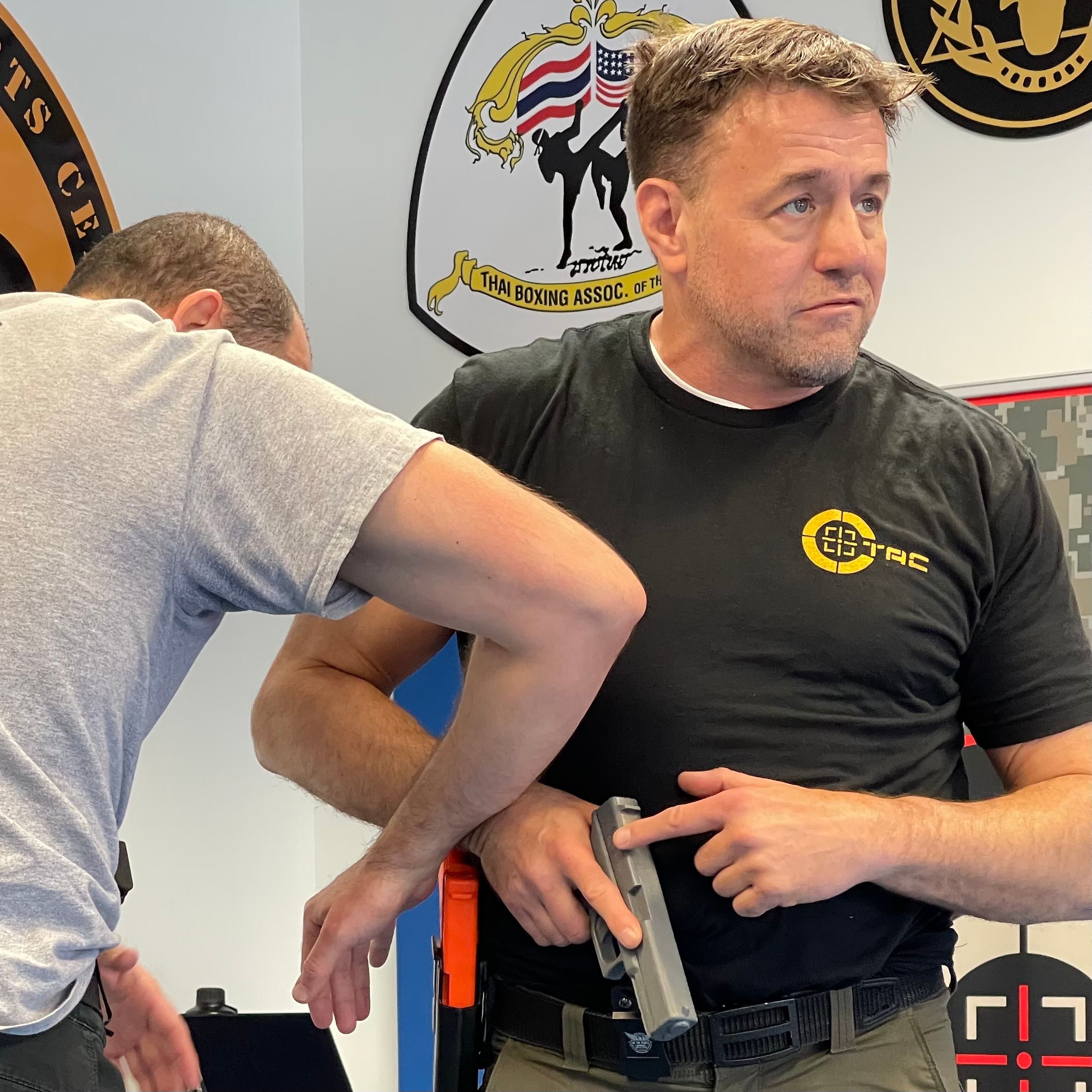
C-TAC organizes the protection problem around four connected responsibilities: the threat, the protected person, the environment, and the exit. None of them can be evaluated in isolation because each one changes the meaning of the others.
The Threat
What is the person doing, where is their attention directed, how is the behavior changing, and what level of force is actually developing?
The Protected Person
Where are they, can they move, do they understand your direction, and are their actions creating safety or increasing exposure?
The Environment
What do walls, vehicles, furniture, crowds, surfaces, entrances, and restricted pathways make possible or prevent?
The Exit
Where is safety, which route remains available, and can you reach it without abandoning the protected person or creating a greater risk?
The protected person cannot be treated like a motionless training prop. Under stress, people may freeze, grab the protector, move in the wrong direction, return for property, become focused on a loved one, or fail to understand what is happening. A method that works only when the protected person behaves perfectly is not yet a dependable protection method.
The environment is equally active. A doorway may offer an exit while also creating a choke point. A vehicle may provide transportation, concealment, an obstacle, or a confined space. A wall can restrict movement or prevent access from one direction. A crowd can contain witnesses, assistance, confusion, and additional threats at the same time. Protection training must teach the student to read what the environment gives and what it takes away.
The exit is not simply the nearest door. It is the safest available direction that can realistically be used by the people involved. The protected person may have limited mobility, be responsible for a child, or be unable to move quickly. A route that is available to the trained protector may not be usable by the person the protector is responsible for guiding.
The Larger Objective
A protection problem is not only about controlling a threat. It is about preserving the person, the pathway, and the ability to make the next decision.
Before Physical Contact
Prevention Is Part of Protection
Professional protection is not built around waiting for an assault. In 2025, ASIS International released an Executive Protection Standard that describes the field through risk assessment, advance planning, intelligence, transportation security, emergency response, communication, medical support, and continuous evaluation. The importance of that framework is not limited to professional teams. It illustrates a larger truth: effective protection is a system for managing risk before, during, and after an incident.
The United States Secret Service uses similarly important language in its work on targeted-violence prevention: prevention is the best form of protection. That statement does not mean every violent event can be predicted or prevented. It means a capable protection model searches for opportunities before physical force becomes the only remaining option.
For a civilian, prevention can begin with ordinary preparation. Know where you are going. Consider the route, parking, entrances, exits, companions, communication, medical needs, and local conditions. Notice changes in behavior and access. Avoid allowing convenience or routine to remove every alternative. The objective is not to live in fear. It is to arrive with more information and preserve more choices.
This connects directly to the C-TAC Principle of Time. Preparation can place you ahead of time. Recognition can help you remain on time. Failure to plan, observe, or decide can leave you behind time. Protection therefore begins long before the first physical movement taught in a martial arts class.
The deeper lesson is that avoidance is not the absence of capability. Evacuation is not cowardice. Choosing not to enter, moving before access is restricted, or leaving before behavior becomes assaultive can represent excellent tactical judgment. If the mission is protection, an outcome with no physical exchange may be the highest expression of the skill.
The Geometry of Responsibility
Position Can Matter Before Technique
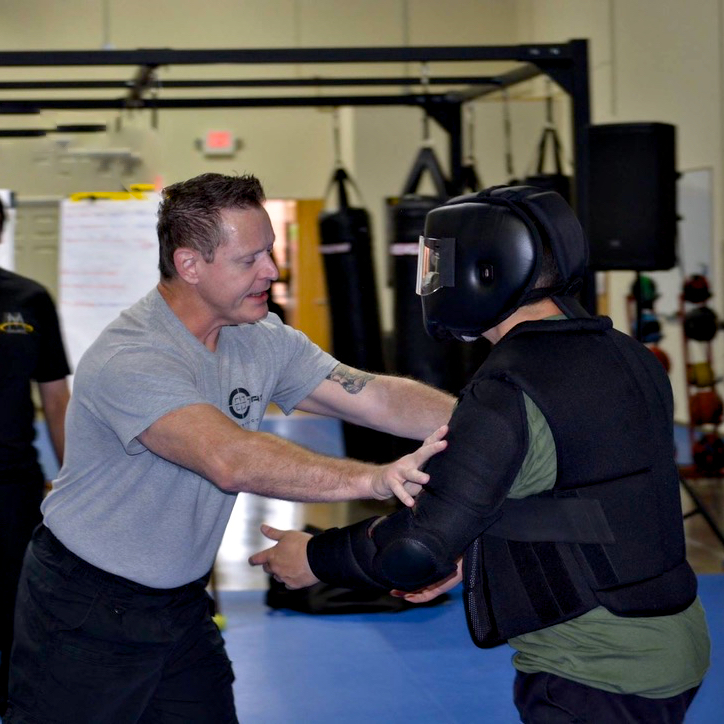
When protecting yourself, position is usually measured between you and the threat. When protecting another person, position becomes a three-part relationship. There is the threat, the protected person, and the protector. Every movement changes who can reach whom, which pathway remains open, and what must happen next.
If the protector moves toward the threat but leaves the protected person accessible, the protection problem has not been solved. If the protector stands directly in front of the protected person without creating movement, both people may become fixed in place. If the protected person moves unexpectedly, a useful angle can disappear immediately.
Good position may interrupt access, redirect movement, create time, support communication, and open a route toward safety. Poor position may trap the person being protected, restrict the protector’s movement, or place both people between multiple problems. This is why C-TAC uses the idea of position before technique. A better position can reduce the amount of force required, while poor positioning can make even a good technique arrive late.
Position is not a pose. It is a relationship that must be continually updated. The protector has to understand what the current position provides, what it removes, and where movement should lead. That ability cannot be developed entirely through drills in which two people begin at an agreed distance, face one another, and remain inside an open training area.
Active Problem Management
De-escalation Is Not Passive
De-escalation is sometimes misunderstood as doing nothing, surrendering control, or hoping an aggressive person becomes reasonable. That is not a useful definition. Guidance from the United States Department of Justice describes de-escalation as verbal and nonverbal skills used to slow the sequence of events, improve situational awareness, support threat assessment, and allow better decision-making so that physical confrontation or injury becomes less likely.
Under that definition, de-escalation is active work. It can involve managing distance, tone, posture, movement, boundaries, attention, and time. It can create an opportunity for the protected person to move, for assistance to arrive, or for new information to become visible. It may also reveal that the threat is continuing to escalate despite reasonable attempts to slow the event.
A protection system must therefore operate across more than one level of force. Not every problem begins as an assault, and not every lower-level problem should be pushed into one. The protector needs options for awareness, presence, communication, movement, disengagement, control, and higher levels of response when they become necessary.
This is where mission prevents ego from taking over. An insult does not automatically require a physical answer. Social pressure does not require us to surrender a boundary, but neither does it require us to turn every boundary test into a contest. The protector’s question remains consistent: which choice best serves safety, responsibility, and the actual conditions in front of me?
More Than One Audience
Your Voice Must Serve the Mission
During a protection event, the protector may need to communicate with several audiences at once. The threat may need a boundary. The protected person may need direction. Bystanders may need to understand the protector’s intent. Emergency responders may need accurate information about what is happening and where assistance is required.
Communication becomes difficult when physical pressure changes breathing, attention, and emotional state. Speech may become rushed, aggressive, confused, or disappear entirely. A person may know exactly what should be said in a quiet classroom but lose access to those words when contact, uncertainty, and responsibility arrive together.
This is why verbal skill cannot remain separate from physical training. Language should be brief, purposeful, and connected to an objective. The protector may need to establish a boundary, direct movement, request assistance, or communicate an intention to disengage. The exact words will depend on the situation, but the ability to breathe, speak, listen, and continue observing must be developed under progressive pressure.
Words also help the protected person become part of the solution. Without direction, that person is left to interpret the event while experiencing their own stress response. Clear communication can give them a task and a direction. It can reduce confusion and help turn several independent people into a more manageable protection problem.
A protector’s hands, eyes, feet, and voice must remain connected to the same objective.
Decision Quality Under Pressure
Mission Clarity Matters More as Stress Rises
Stress does not affect every person or every task in exactly the same way. Research shows a more complicated picture than the common claim that stress simply makes people blind or incapable. In some circumstances, stress can accelerate the detection of threatening information. In others, it can disrupt attention, reduce accuracy, or alter the evidence a person requires before reaching a decision.
A meta-analysis of experimental research found that stress was associated, on average, with somewhat more disadvantageous, reward-seeking, and risk-taking decisions. More recent research has also found that decision quality can deteriorate when acute stress is combined with time pressure. These findings should not be treated as predictions of how every individual will behave. They do support the practical value of preparing important decisions before the worst moment arrives.
A clear mission reduces the number of questions that must be invented under pressure. Where is the person I am responsible for? Where is the safest available direction? Is the threat increasing, decreasing, or changing? Does continued engagement serve protection, or has it become a contest? What information must be communicated now?
Training should not provide one automatic answer for every event. It should develop priorities that organize perception and decision-making. Students need enough variability to recognize changing conditions, enough pressure to test their availability, and enough control that the exercise continues to teach rather than merely overwhelm.
This is also why intensity alone is a poor measurement of realism. A chaotic drill can feel convincing while rewarding fixation, uncontrolled force, poor communication, or abandonment of the protected person. The training environment should reveal whether mission-directed behavior survives pressure. If it does not, the drill has identified something that must be developed, not something that should simply be driven harder.
After Physical Contact
The Mission Continues When the Threat Stops
Martial arts exercises commonly end when the technique works. A protection event does not reset so cleanly. The physical threat may have stopped, but the protected person may be missing, injured, frightened, or still exposed. There may be additional threats, blocked exits, confused witnesses, medical needs, or emergency responders moving toward an incomplete picture.
The protector must be able to stop unnecessary force and return to observation. Force should remain connected to a protective purpose rather than becoming punishment or retaliation. When the danger changes, the need for force may also change. The ability to recognize that transition is part of capability.
The next responsibility is to rebuild the larger picture. Locate the protected person. Reassess the environment. Move toward safety when possible. Request appropriate assistance. Communicate clearly and provide reasonable aid when it is safe, appropriate, and within your level of training.
Consequences may continue long after everyone leaves the scene. There may be injuries, witnesses, recordings, reports, legal questions, employment consequences, family effects, and emotional recovery. Laws differ by jurisdiction and circumstance, so no article can tell a reader exactly what every future situation will justify. Responsible preparation includes qualified legal education for the place where a person lives and the role that person performs.
The important training lesson is that a drill ending with the last physical movement ends too early. The student should practice stopping, reassessing, communicating, reconnecting with the protected person, and explaining the purpose behind the decisions made. Accountability is not an administrative detail added after the skill. It is part of the protection mission from the beginning.
A Better Training Evaluation
Five Questions for the Protection Mission
- 01Did the protected person become safer?
Do not measure success only by what happened to the threat. Measure the condition, location, and continued exposure of the person you were responsible for protecting.
- 02Did the action preserve or create options?
A response that succeeds physically but traps everyone in place may make the next problem harder to solve.
- 03Was the level of force connected to the actual problem?
The response should reflect what was happening, not the protector’s ego, preferred technique, or emotional desire to continue.
- 04Could the protector still observe and communicate?
Capability includes maintaining enough organization to direct the protected person, read change, request assistance, and stop when conditions change.
- 05What happened after the first success?
The exercise should continue long enough to test reassessment, movement toward safety, accountability, and the decisions that follow physical contact.
Train for the Responsibility
Physical Skill Must Serve the Larger Mission
Fighting skill is not the enemy of protection. It may become critically important when avoidance, communication, movement, and lower-force options cannot resolve the danger. The mistake is allowing the physical exchange to become the entire definition of the problem.
Protection requires a wider field of attention and a different standard of judgment. It asks the student to recognize risk earlier, prepare before arrival, manage another human being under stress, understand the environment, preserve an exit, communicate while moving, select an appropriate level of force, stop when the purpose changes, and remain accountable afterward.
That is why protection is a different mission from fighting. The protector does not train merely to win an exchange. The protector trains to think, observe, decide, move, communicate, and act in service of someone else’s safety.
Explore C-TAC TrainingReferences and Further Reading
ASIS International, Executive Protection Standard overview
United States Secret Service, Behavioral Threat Assessment Units guide
United States Department of Justice, Law Enforcement Best Practices: Lessons Learned from the Field
National Institute of Justice, From Warriors to Guardians
Starcke and Brand, Effects of Stress on Decisions Under Uncertainty: A Meta-Analysis
This article provides general educational information. It is not legal, medical, or situation-specific advice. Laws and professional responsibilities vary by jurisdiction and role.