C-Tac Orientation
Welcome to the
C-Tac Journey
Your Orientation Has Begun.
Thank you for beginning the C-Tac Orientation. Over the coming days, you will receive a guided series introducing the philosophy, training systems, decision-making tools, and development pathways behind the Civilian Tactical Training Association.
Awareness. Preparedness. Protection. Responsible Action.
Orientation Confirmation
Your First Message Is On The Way
Your C-Tac Orientation has begun.
Check your inbox for the first message in the Orientation journey. If it does not arrive shortly, check your Promotions or Spam folder.
Add the sender to your contacts so future Orientation messages arrive correctly.
The System
Built for the Realities of Modern Civilian Self-Protection
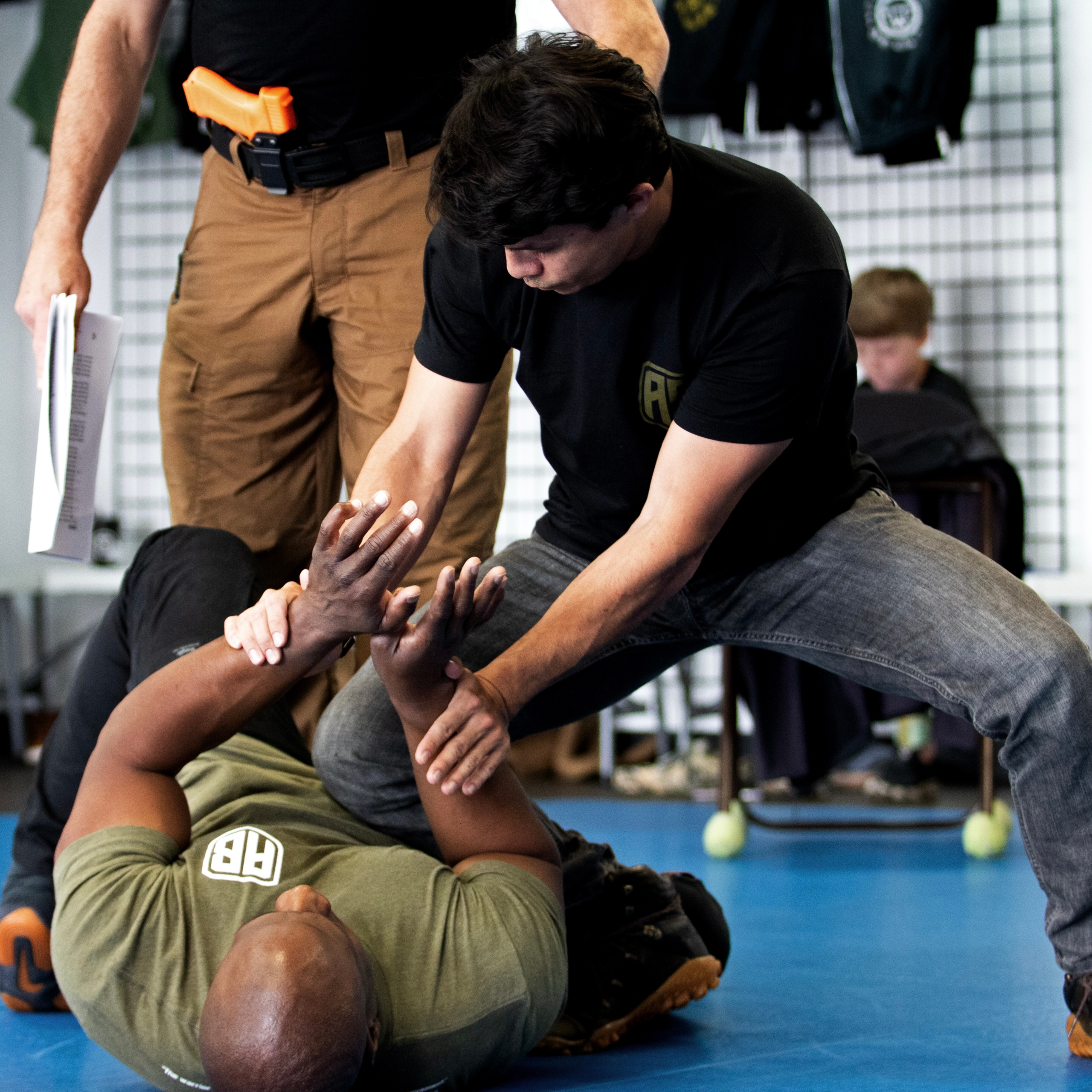
C-Tac was developed to bridge the gap between traditional martial arts and the realities of modern violence.
Most civilian self-defense programs focus almost entirely on physical techniques.
Real-world violence is far more complex.
It involves awareness, communication, emotional control, legal responsibility, low levels of control, environmental considerations, everyday carry, decision-making under pressure, and knowing when to avoid conflict altogether.
Everything inside C-Tac is built upon a Force Continuum that prepares you with appropriate responses across the entire spectrum of civilian conflict.
From posturing, verbal skills, and low levels of control, through empty-hand tactics, improvised weapons, and legally justified lethal force, the system helps you understand not only what to do, but when, why, and how to apply the appropriate level of response.
Every response should be visually appropriate, socially acceptable, and legally explicable.
Those principles are just as important as the physical skills themselves.
C-Tac was built to prepare responsible people for those realities.
Rather than collecting techniques, you will learn practical concepts, structured training methods, and a complete framework for developing greater capability before, during, and after violent encounters.
Throughout your Orientation, you will begin exploring the philosophy, training principles, and educational approach that make C-Tac different.
Your Orientation
During Your Orientation
Over the coming days, you will begin exploring the systems, principles, and learning environments that shape C-Tac.
The C-Tac Philosophy
Learn why C-Tac was created to bridge the gap between traditional martial arts and the realities of modern civilian violence.
The Combat Blueprint
Explore the framework used to organize the major environments of conflict and identify where training strengths, gaps, and priorities exist.
The Force Continuum
Understand how C-Tac develops appropriate responses across multiple levels of force, from posture and verbal skills through control, empty-hand tactics, weapons, and legally justified lethal force.
Awareness and Decision-Making
Learn how observation, recognition, judgment, timing, and emotional regulation influence what happens before physical action becomes necessary.
Low Levels of Control
Discover practical options for creating boundaries, managing contact, controlling movement, and resolving problems without immediately escalating to higher levels of force.
Everyday Carry and Environmental Problems
Explore how weapons, tools, vehicles, confined spaces, obstacles, clothing, and the surrounding environment change civilian self-protection decisions.
Legal Defensibility and Appropriate Response
Understand why every response should be visually appropriate, socially acceptable, legally explicable, and proportionate to the problem being faced.
Student and Instructor Development
See how civilians can begin as students, deepen their capability through continued study, and eventually pursue instructor development through the Civilian Tactical Training Association.
From the Founder
A Personal Welcome
Welcome to C-Tac.
I’m grateful you’ve decided to begin this journey.
For many years, I studied and taught a wide variety of martial arts systems. Those systems gave me a tremendous foundation and shaped much of who I am today.
But over time, I began to notice a gap.
Many of the systems I trained in did not fully address the legal, social, and environmental realities that we face today.
They also tended to provide answers at only one level of force.
Most techniques assumed you were already in a fight.
The problem is that real violence rarely begins that way.
Many confrontations start as low-level social exchanges. A disagreement, an aggressive approach, a verbal confrontation, or someone invading your personal space can all become the beginning of something much more serious.
That realization changed the way I looked at self-protection.
I became convinced that people needed answers across the entire Force Continuum, not just at the assault level.
They needed practical options for posture, communication, de-escalation, low levels of control, empty-hand responses, intermediate force, and, when absolutely necessary, lethal force.
Just as importantly, they needed to understand when each response was appropriate.
If you’re highly skilled at the lower levels of the Force Continuum, especially communication, awareness, and de-escalation, you may prevent the confrontation from ever escalating to assault or lethal force.
Of course, if that escalation cannot be avoided, we want you to have the best possible answers available.
The goal is to prepare you for the entire spectrum of violence, not just one part of it.
Another area that deserved far more attention was everyday carry.
Putting on a training kit and moving through the different primal environments of the Combat Blueprint changes mechanics in significant ways. Carrying a firearm, knife, flashlight, medical equipment, or other tools affects movement, positioning, striking, grappling, weapon retention, and decision-making.
Those realities simply were not being addressed in most martial arts systems I had studied.
We also began incorporating subjects like tactical medicine, protective movement, environmental problem solving, and many of the practical skills traditionally associated with executive protection.
Many of these capabilities are just as valuable to responsible civilians as they are to professional protectors.
Ultimately, C-Tac was created to fill the gap between traditional martial arts and the realities of modern civilian self-protection.
Whether you’re here to become a more prepared citizen, strengthen your existing training, or eventually become an instructor, I’m glad you’re here.
I hope this Orientation challenges your thinking, expands your perspective, and helps you build the knowledge, judgment, and capability to protect yourself and the people you care about.
Thank you for joining us.
I look forward to sharing this journey with you.
Alan Baker
Founder, Civilian Tactical Training Association
Continue Exploring
While You Are Waiting
Your first Orientation message should arrive shortly. In the meantime, you are welcome to explore the student, instructor, event, and association pathways within C-Tac.
Civilian Training
Student University
Begin developing greater awareness, judgment, preparedness, and practical self-protection capability through the C-Tac student pathway.
Explore the Student PathProfessional Development
Instructor Program
Explore the structured instructor-development pathway of the Civilian Tactical Training Association and learn how C-Tac instructors are prepared to teach responsibly.
Explore the Instructor PathLive Training
Events and Instructor Camps
Discover annual events, instructor camps, immersion training, and live opportunities to study the C-Tac System in greater depth.
Explore Upcoming EventsThe Association
Team and Contact
Learn more about the Civilian Tactical Training Association, connect with the team, or ask questions about student and instructor development.
Connect With the TeamYour Orientation Has Begun
You Have Not Simply Joined an Email List.
You have begun your introduction to C-Tac and the Civilian Tactical Training Association.
We look forward to sharing the philosophy, training systems, decision-making tools, and development pathways designed to help build more capable civilians, instructors, protectors, and leaders.